How Rabbit Reproduction and Breeding Habits Shape Australian Ecosystems

Rabbits are one of the most influential invasive species in Australia, profoundly affecting the continent's ecosystems. Their rapid reproduction and unique breeding patterns have led to significant environmental changes. Understanding how rabbit reproduction works and how their breeding habits impact Australian landscapes is crucial for managing their populations and protecting native flora and fauna.
The Basics of Rabbit Reproduction in Australia
Rabbits reproduce at an astonishing rate, which is a key factor in their success as an invasive species. Female rabbits, known as does, can become pregnant again almost immediately after giving birth. This ability to conceive multiple times a year allows populations to explode under favourable conditions.
Gestation period: Approximately 28 to 31 days.
Litter size: Usually between 4 to 12 kits (baby rabbits).
Breeding frequency: Does can produce up to 6 litters annually.
Sexual maturity: Rabbits can breed as early as 3 to 4 months old.
This rapid reproductive cycle means that a single pair of rabbits can produce hundreds of offspring in just one year, leading to exponential population growth if unchecked.

Close-up view of a wild rabbit in Australian bushland
How Rabbit Reproduction Influences Ecosystem Dynamics
The prolific breeding of rabbits has a cascading effect on Australian ecosystems. Their large populations lead to intense grazing pressure on native vegetation, which disrupts plant communities and soil health.
Impact on Vegetation
Rabbits feed on a wide variety of plants, including grasses, shrubs, and young trees. Their grazing habits can:
Reduce plant biodiversity by selectively feeding on certain species.
Prevent regeneration of native plants by eating seedlings.
Cause soil erosion due to loss of ground cover.
Effects on Native Wildlife
The degradation of habitat caused by rabbits affects native animals in several ways:
Loss of food sources for herbivorous native species.
Reduced shelter and nesting sites for birds and small mammals.
Increased competition for resources.
Soil and Landscape Changes
Rabbit burrowing activities also contribute to soil disturbance, which can:
Alter soil composition and nutrient cycling.
Increase vulnerability to invasive plant species.
Change water infiltration and retention patterns.
These ecological changes highlight the importance of understanding and managing rabbit populations to maintain ecosystem balance.
Managing Rabbit Populations Through Understanding Breeding Patterns
Effective control of rabbits requires strategies that consider their reproductive biology. By targeting specific stages of their breeding cycle, management efforts can be more successful.
Timing Control Measures
Seasonal breeding peaks: Rabbits tend to breed more during cooler months with adequate rainfall.
Targeting young rabbits: Controlling populations before juveniles reach sexual maturity can reduce future breeding.
Control Methods
Biological control: Introduction of diseases like myxomatosis and rabbit haemorrhagic disease virus (RHDV) has helped reduce numbers.
Fencing and exclusion: Protecting sensitive areas from rabbit access.
Habitat modification: Removing shelter and food sources to discourage breeding.
Trapping and shooting: Direct population reduction methods.
Understanding the timing and frequency of rabbit reproduction allows land managers to plan interventions that disrupt breeding cycles and reduce population growth.
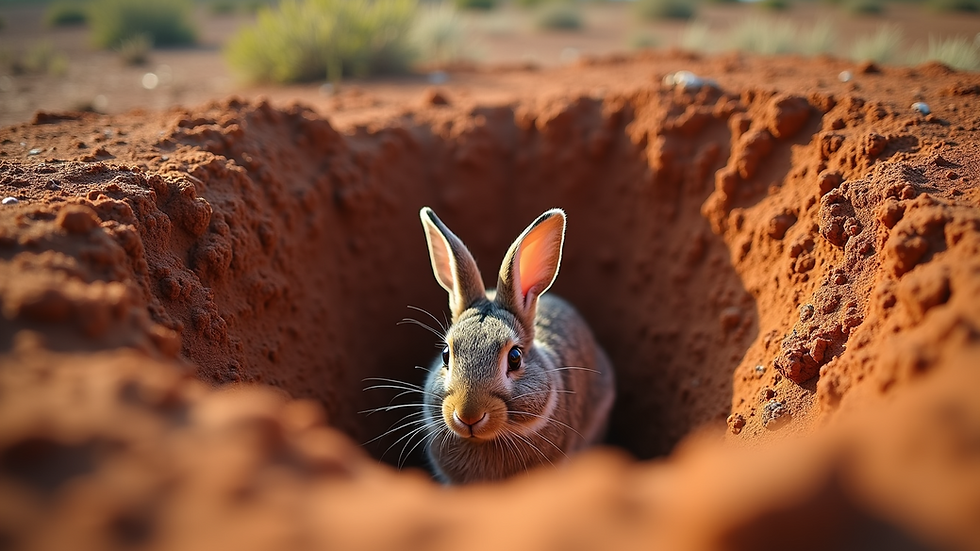
High angle view of rabbit burrows in dry Australian soil
The Role of Climate and Environment in Rabbit Breeding Success
Environmental factors play a significant role in the success of rabbit reproduction in Australia. Climate variability influences food availability, breeding frequency, and survival rates.
Rainfall: Increased rainfall leads to more vegetation growth, providing abundant food and encouraging breeding.
Temperature: Mild temperatures support year-round breeding, while extreme heat or cold can reduce reproductive rates.
Drought conditions: Limit food and water, causing population declines but often followed by rapid recovery when conditions improve.
These factors create fluctuating rabbit populations that can boom and bust, complicating management efforts.
Future Directions: Balancing Ecosystem Health and Rabbit Control
The challenge in Australia is to balance the ecological damage caused by rabbits with humane and effective control methods. Research into rabbit reproduction and behaviour continues to inform better strategies.
Integrated pest management: Combining biological, chemical, and physical controls.
Community involvement: Educating landowners and the public about rabbit impacts and control.
Monitoring and research: Tracking population changes and breeding patterns to adapt management.
By leveraging knowledge of rabbit breeding habits, Australia can work towards restoring ecosystems while managing this persistent invasive species.
Understanding the complex relationship between rabbit reproduction and Australian ecosystems is key to protecting native biodiversity. Through informed management and ongoing research, it is possible to mitigate the environmental impacts of rabbits and promote healthier landscapes for future generations.


Comments